How the Traffic Rider bike garage works
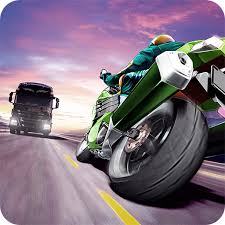
The official store listing promises 34 motorbikes, and every one of them sits in the same garage screen. You begin with a single entry-level Traffic Rider bike. Faster bikes cost cash, and many are also tied to your career progress, so you cannot simply grind one mode and buy the top bike on day one.
Each bike has a set of stats shown as bars. Upgrades raise those bars, but each bike also has a ceiling. That means a fully upgraded starter bike will still lose to a mid-tier bike with no upgrades at all on raw top speed.
What the stats actually do
- Top speed: the most important stat for score. Points scale with speed, and the 100 km/h bonus zone becomes easier to hold.
- Acceleration: how quickly you get back up to speed after braking around traffic. Underrated in crowded career missions.
- Handling: how fast the bike leans between lanes. Good handling turns near misses into clean overtakes.
- Brakes: your emergency button. Strong brakes save runs in two-way mode.
Upgrades are cheaper than new bikes early on. Max the cheap tiers on your current bike before you save for the next one.
A sensible buying order
There is no single best Traffic Rider bike for everyone, but a reliable plan looks like this:
- Starter phase: upgrade handling and brakes first so you crash less, then speed.
- First big purchase: buy the cheapest bike with a clearly higher top-speed bar. Speed multiplies everything you earn.
- Mid game: skip bikes that only offer a small jump. Save for a larger step instead.
- Late game: once missions demand very high average speed, a top-tier sport bike is worth the long grind.
Looks versus performance
Some bikes look great but sit in the middle of the stat chart. If a mission keeps beating you, compare the stat bars rather than the price tag. A newer update also added stickers for customising your bike, so you can make an older favourite look fresh without changing how it rides.
Matching the Traffic Rider bike to the mode
The best Traffic Rider bike for a mode is not always your fastest one. Endless and Time Trial reward pure top speed, so a high-speed bike pays back quickly there. Overtake-heavy career missions favour handling, because you need to dart between lanes without clipping mirrors. Free Ride is the perfect place to test a new purchase with no penalty for crashing.
If you only own two bikes, keep one tuned for agility and one for raw speed. That simple split covers almost every mission type in the career.
Upgrade costs and diminishing returns
Upgrade prices rise with each level. The first few levels of every stat are cheap and give a big, noticeable change. The last levels cost far more for a smaller gain. In practice that means:
- Buy the cheap early levels of every stat on a new bike straight away.
- Only push one stat to the maximum if a specific mission needs it.
- Compare the cost of the final upgrades with the price of the next bike. Often the new bike is the better buy.
Mistakes new riders make in the garage
- Buying for looks. A stylish bike with average stats can stall your career.
- Spreading cash too thin. Five half-upgraded bikes are worse than one well-tuned bike.
- Ignoring brakes. On two-way roads, strong brakes turn crashes into close calls.
- Skipping Free Ride tests. Every bike leans and accelerates differently. Learn it before a hard mission.
Rule of thumb: buy a new Traffic Rider bike only when its top-speed bar is clearly higher than your fully upgraded current bike.
Earning cash for the next bike
Bikes are bought with cash you earn on the road. The fastest ways to fill your wallet are:
- Overtaking closely above 100 km/h for near-miss bonuses.
- Riding in the opposite lane on two-way roads.
- Pulling wheelies on clear stretches.
- Finishing career missions for their one-time rewards.
For more ways to boost income, read our career mission tips and the game modes guide.
Frequently asked questions
Should I buy a new bike or upgrade my current one?
Compare the next mission’s demands with the cost of each option. A small upgrade may be enough, while a larger jump can be worth saving for.
What does handling help with?
Handling affects how readily a bike responds to steering, which can make traffic gaps easier to manage.
Are the fastest bikes best for beginners?
Not necessarily. A controllable bike gives new players more time to learn traffic patterns and braking.
Conclusion
Choose a bike that fits your current skill and mission, then upgrade with a clear purpose. Consistent riding can be more useful than spending every reward on top speed.